Slavery The black population was enslaved for hundreds of years, and that oppression hampered their thriving. |  |
 | Second Class CitizensFor a century, the black population was considered second class citizens under Jim-Crow where their opportunities were significantly curtailed. In the 1960s, the civil rights movement changed many hearts and mindsets. Most bigotry was pushed underground and diminished as prejudice became taboo. |
The Welfare StateFor the last sixty years, a new type of oppression became popular. Most people sold the welfare-state as ‘helping’ and a good thing. The misconception of the ‘helping aspect’ of the welfare state was pushed and gained wide acceptance. Every election the stakes were raised, and the welfare state grew. While helping the poor is a noble endeavor; how the help is structured is vitally important. |  |
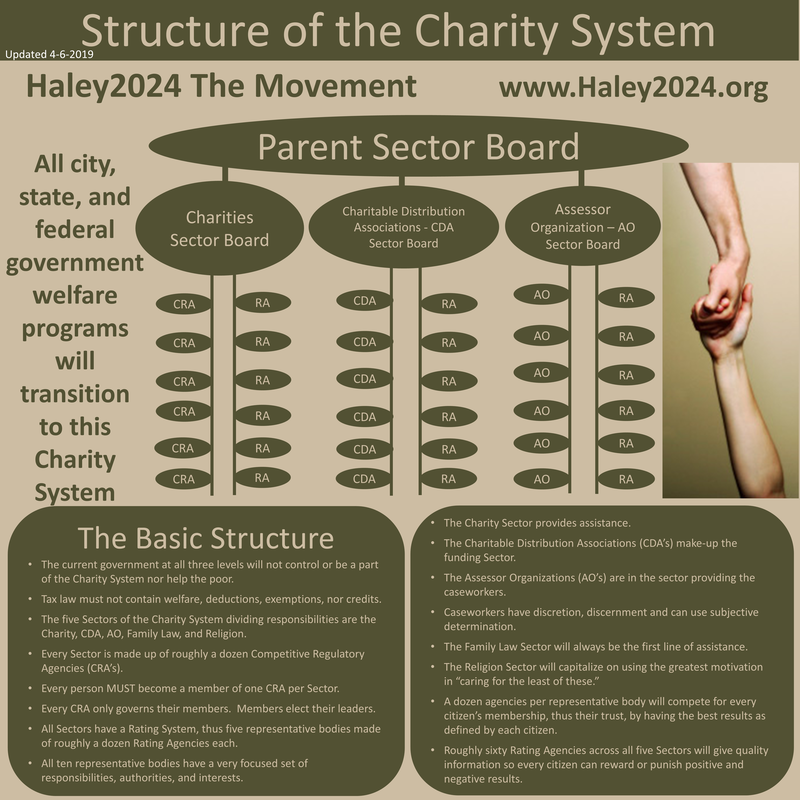 | It made sense to only help those people in bad situations. Therefore, the welfare state gave benefits to people in bad situations. The result was, unfortunately, the incentivization of the people to put themselves in bad situations. As people became reliant on welfare benefits, they could not easily escape the welfare state. |
| A mother with a sick child on Medicaid does not risk her child’s health insurance by getting a job. The government politicians clearly determined that a fatherless home was a bad situation and made a fatherless home a qualification of welfare benefits. As the welfare benefits grew, the incentive to stay unemployed or under-employed grew. The fatherless homes rate increased. | 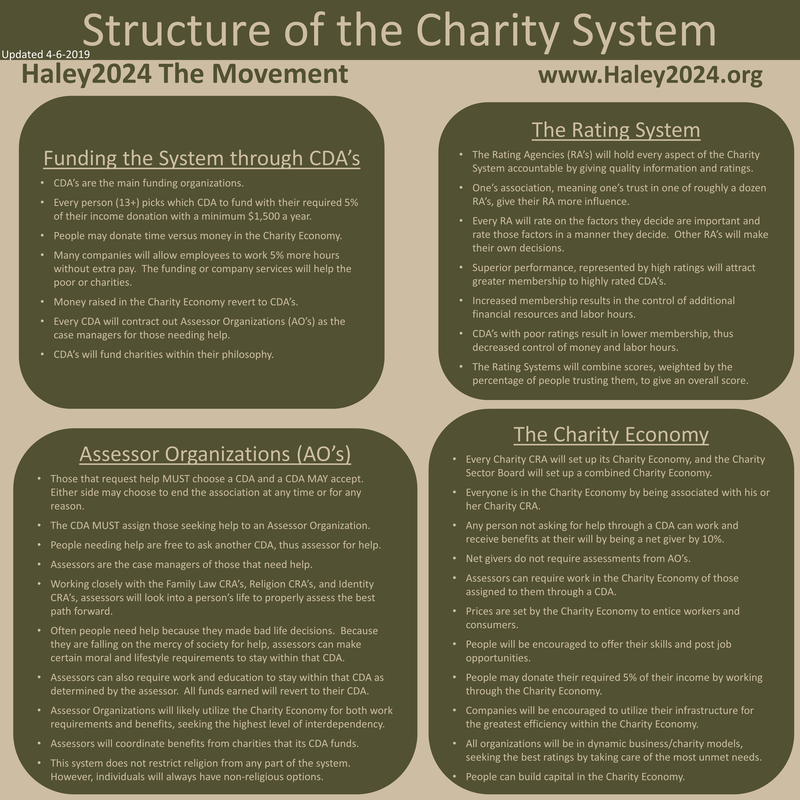 |
 | The missing ingredient of the government welfare state as compared to charity is the subjective determination. Charities always have the ability to say ‘NO’ when they see someone going down the wrong path. The welfare state is controlled by hard and fast laws regarding qualifications of benefits. Often, working a few more hours a week can put someone in a much worse financial situation. |
| While the welfare state affects both the black and white populations; the black community was influenced at a higher percentage rate because of the century of racial discrimination. The black population did not have the time to financially catch up with the white population as the welfare state grew significantly in the same decade (the 60s) as the civil rights movement. Given that low-income was an essential qualification for benefits, the black population qualified at much higher rates. | 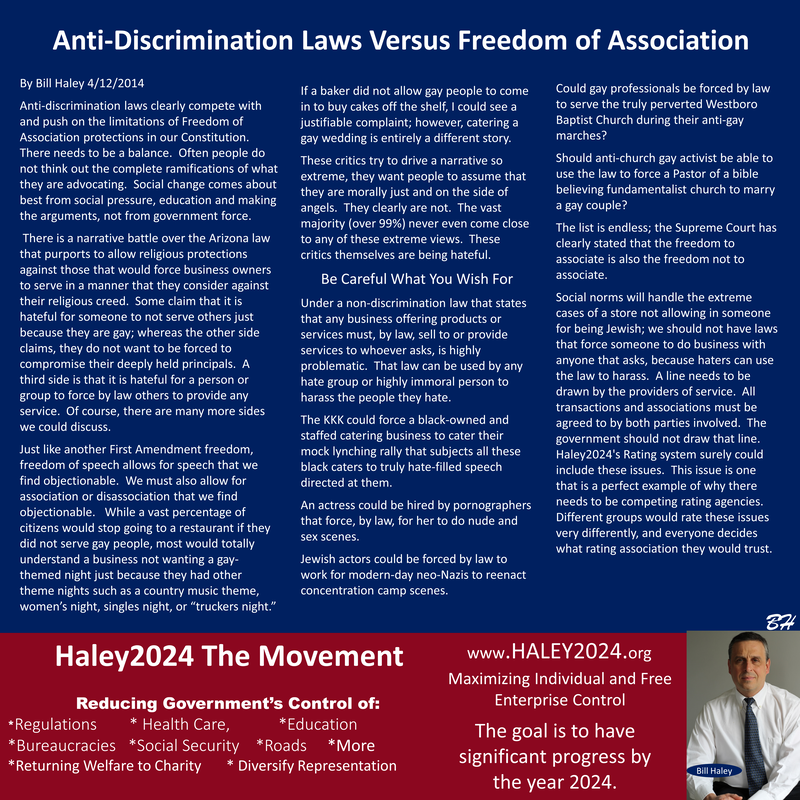 |
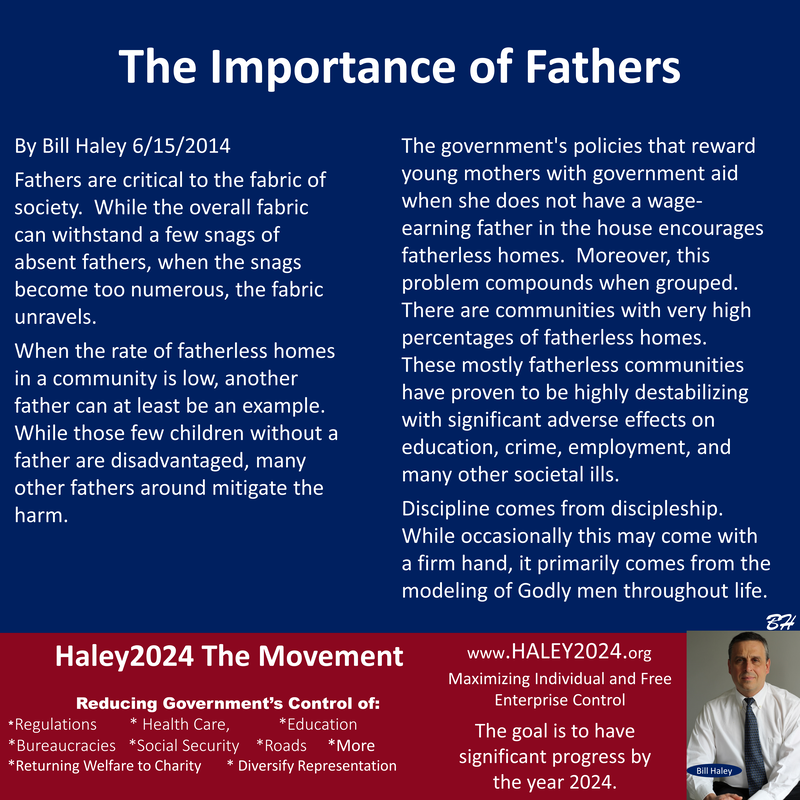
 | While the black population enjoyed a low percentage of fatherless homes in the 1950s, the fatherless rate grows from roughly 20% to approximately 70%. Society can handle a few snags (fatherless homes) in the social fabric; however, the social fabric becomes shredded at 70%. The welfare state expanded the problem by grouping the fatherless homes in neighborhoods of over 95% fatherless homes. |
| Several generations in some areas have now had the misfortune of very little interaction, exposure, or experience of a loving husband and wife relationship. The role of fathers and good marriages are vital in society. The primary and overwhelming reason for the low education rate, low-income rate, high crime rate, high incarceration rate, low wealth rate, and other significant disparities is how much children are exposed to fathers and good marriages. |  |
 | The white and black populations have vastly different rates of welfare use. The US Census states (https://www.census.gov/newsroom/press-releases/2015/cb15-97.html) that in 2012; 41.6 percent of the black population participate in government assistance programs in an average month compared to 13.2% of the white population. This three-times greater percentage is amplified by government policies that tend to group much of the 41.6% together in neighborhoods of much higher concentrations of children with low exposure to fathers and good marriages. This same US Census page documents that 50% of (Female-householder families) participated in major means-tested programs, compared to 14.7% of married families. |
Public EducationThe Public-School System was purported to help educate everyone. Indeed, many Public-School supporters have the best of intentions. An educated populace is a true and valuable public good. How the system is structured is vitally important. If structured well, the system could be highly beneficial. However, if structured poorly, the government can genuinely oppress the people. The current structure of the Public-School System is truly oppressive. | 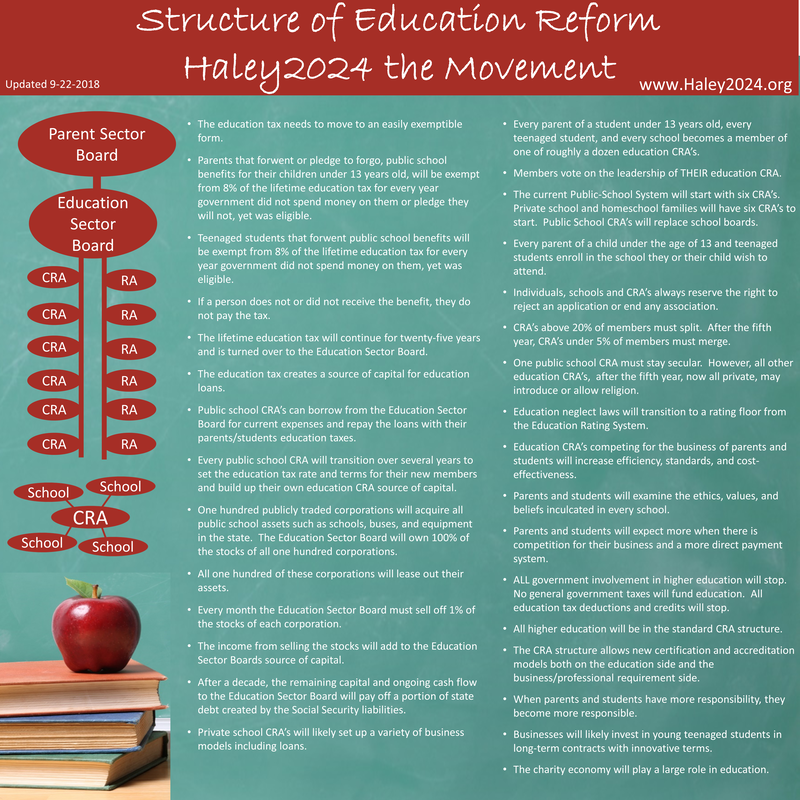 |
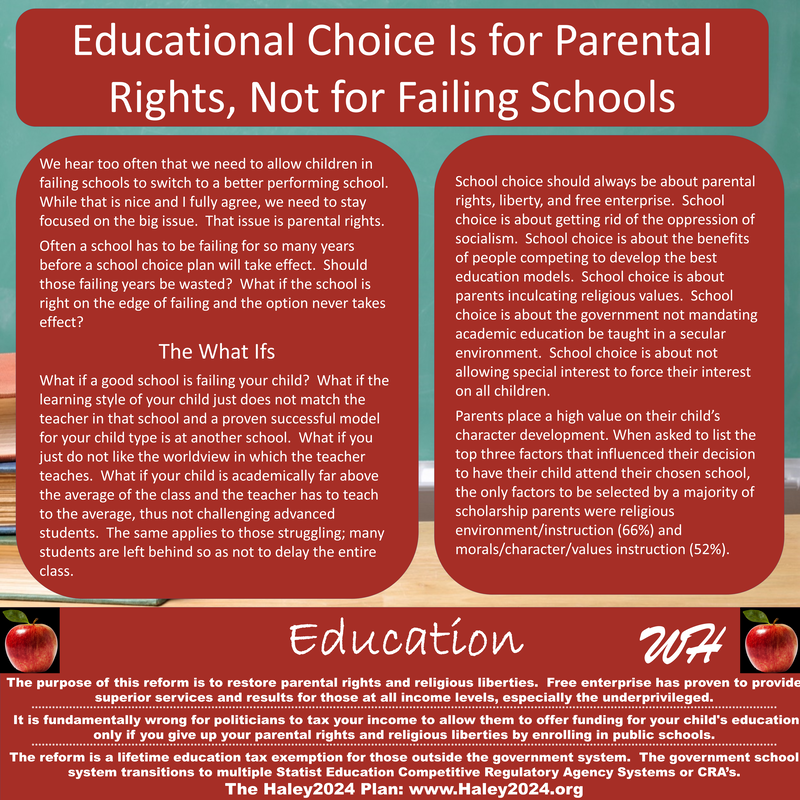 | The structure of the Public-School System is socialism. Government officials teach our children. There are no free enterprise benefits within the government-run schools. All the negatives of socialism are seen within the system. The lack of choice and parental rights is profound. |
| For many reasons, the black population is faring very poorly under the oppressive Public-School System structure. Because many neighborhoods have a high percentage of children without fathers or many good examples of healthy marriages and Public Schools admissions are based on geography; some schools have a high percentage of these disadvantaged children. | 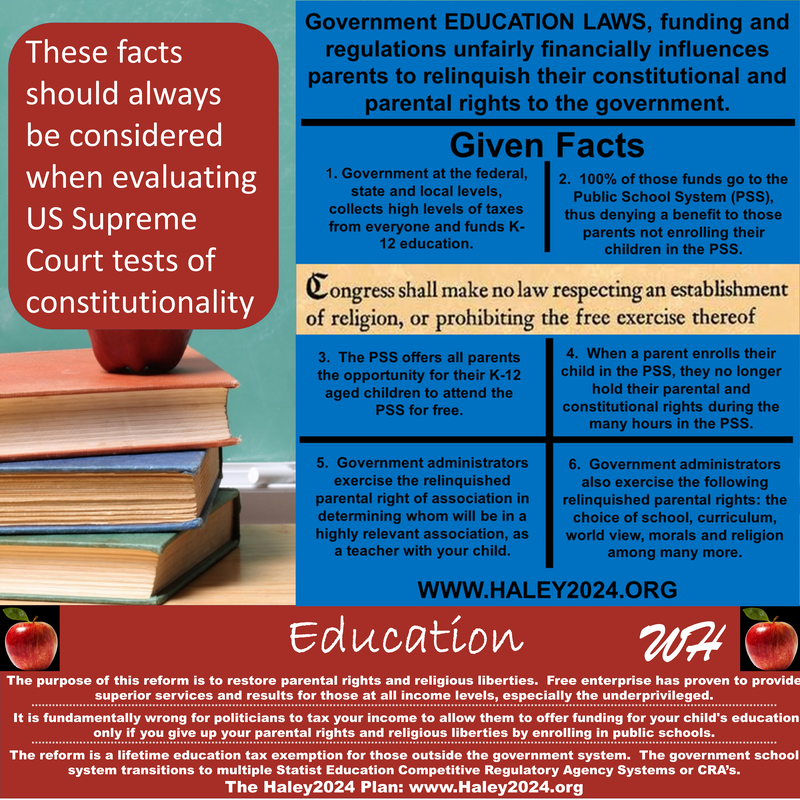 |
The Infringement of Religion
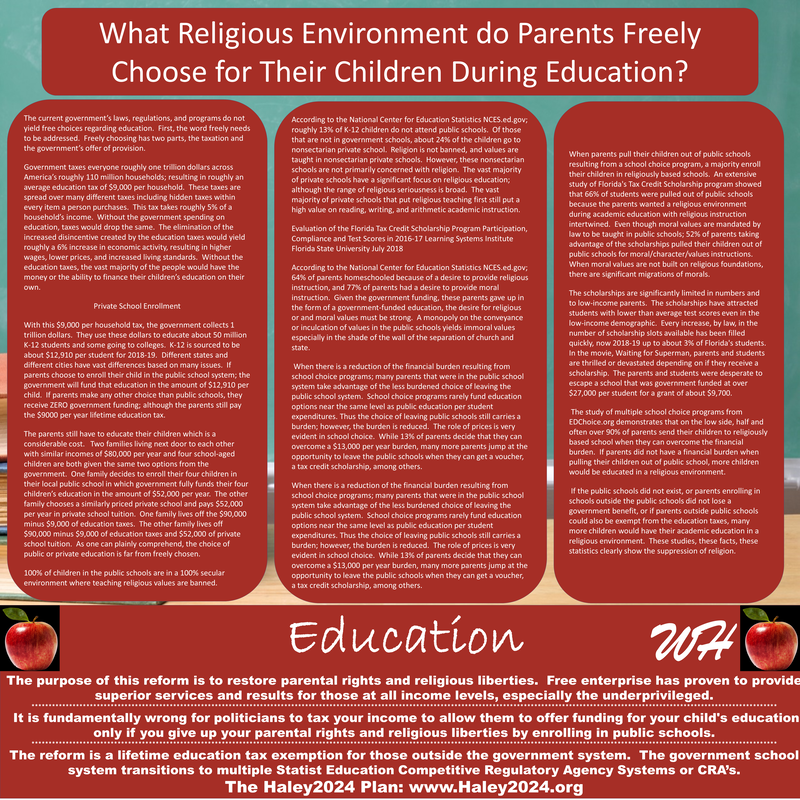 | The church has a long history of academically educating its members. The church has also been highly involved in helping the poor. Since the government has taken over education and the task of helping the poor; the church has taken a significant step back. The government must educate and assist the poor in a secular manner. The government has significantly reduced the level of religion in the peoples’ lives. Religion has been a significant civilizing force in human history, and the infringement of religion has proven to be an exceptionally oppressive force. |
The Best ReparationsThe best reparation is full liberty. Every person should have freedom until they start infringing on another person’s freedom. Rights need to be understood as being left alone. A right is something that government does not infringe. The freedom of speech or of religion is not given to individuals by the government; it is a right inherent in every person, and society established a government that forbids politicians from sending police to stop you from speaking or practicing your religion. The police also must stop individuals from infringing another person’s rights. | 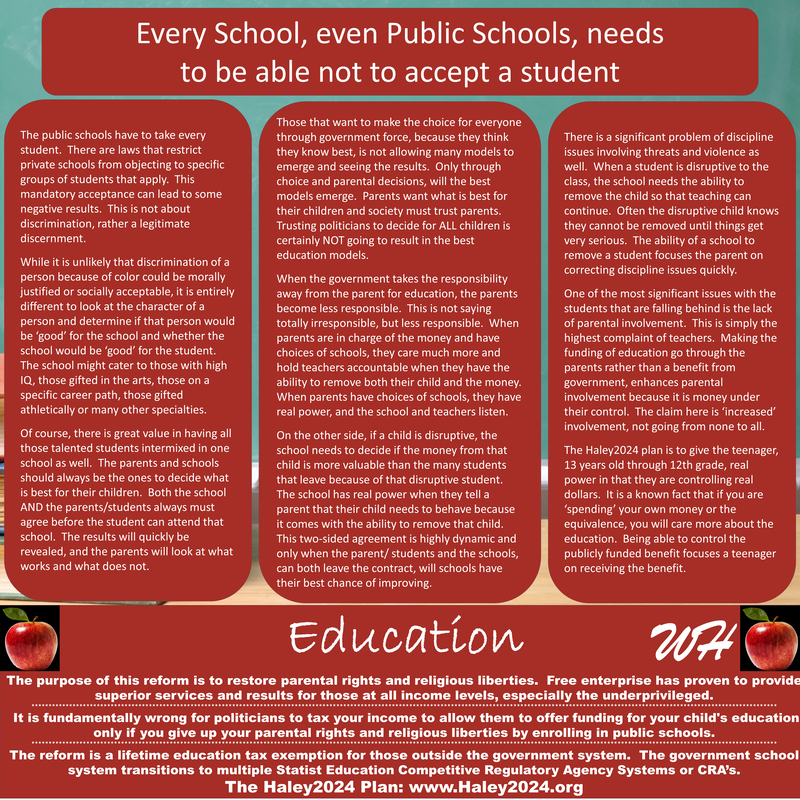 |