Diplomatic Foreign Policy (DFP)
Competitive Governance within every geographic jurisdiction
|
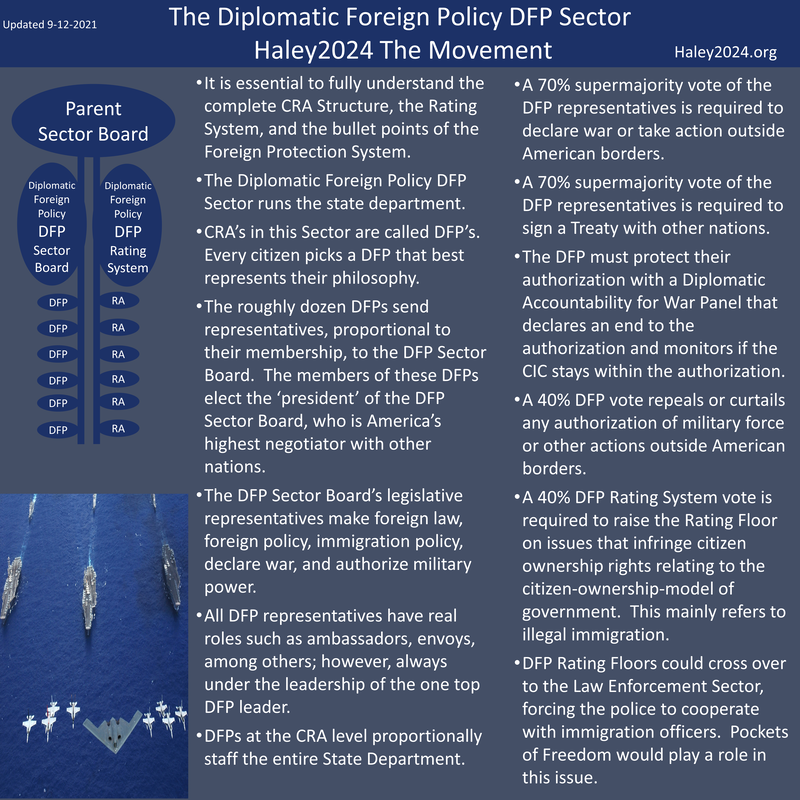
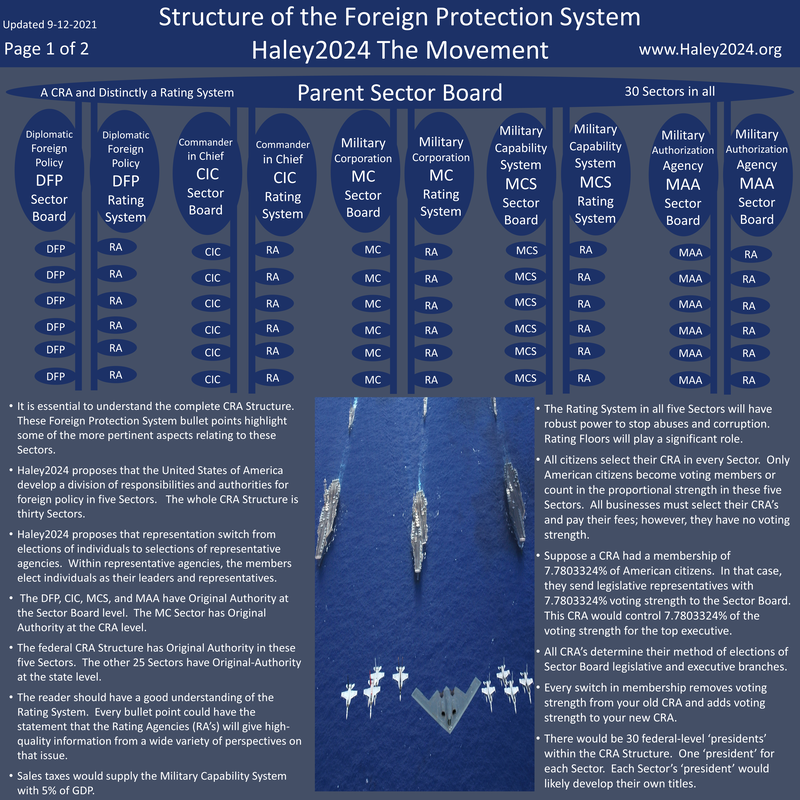
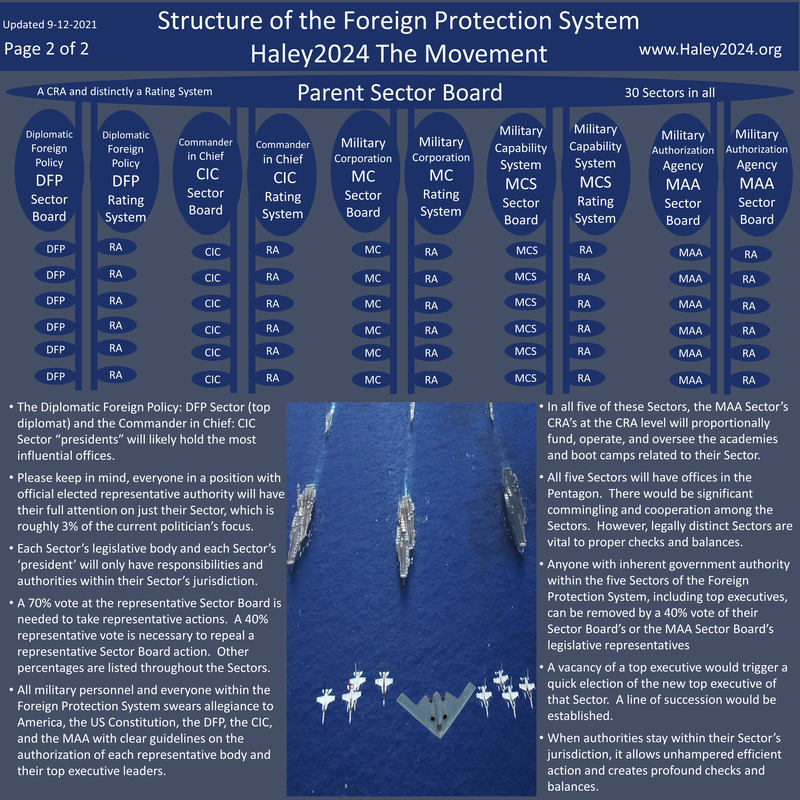
It is essential to fully understand the complete CRA Structure, the Rating System, and the bullet points of the Foreign Protection System.
•The Diplomatic Foreign Policy DFP Sector runs the state department. •CRA’s in this Sector are called DFP’s. Every citizen picks a DFP that best represents their philosophy. •The roughly dozen DFPs send representatives, proportional to their membership, to the DFP Sector Board. The members of these DFPs elect the ‘president’ of the DFP Sector Board, who is America’s highest negotiator with other nations. |
|
|
•The DFP Sector Board’s legislative representatives make foreign law, foreign policy, immigration policy, declare war, and authorize military power.
•All DFP representatives have real roles such as ambassadors, envoys, among others; however, always under the leadership of the one top DFP leader. •DFPs at the CRA level proportionally staff the entire State Department.ge is under construction. More to come. |
|
•A 70% supermajority vote of the DFP representatives is required to declare war or take action outside American borders.
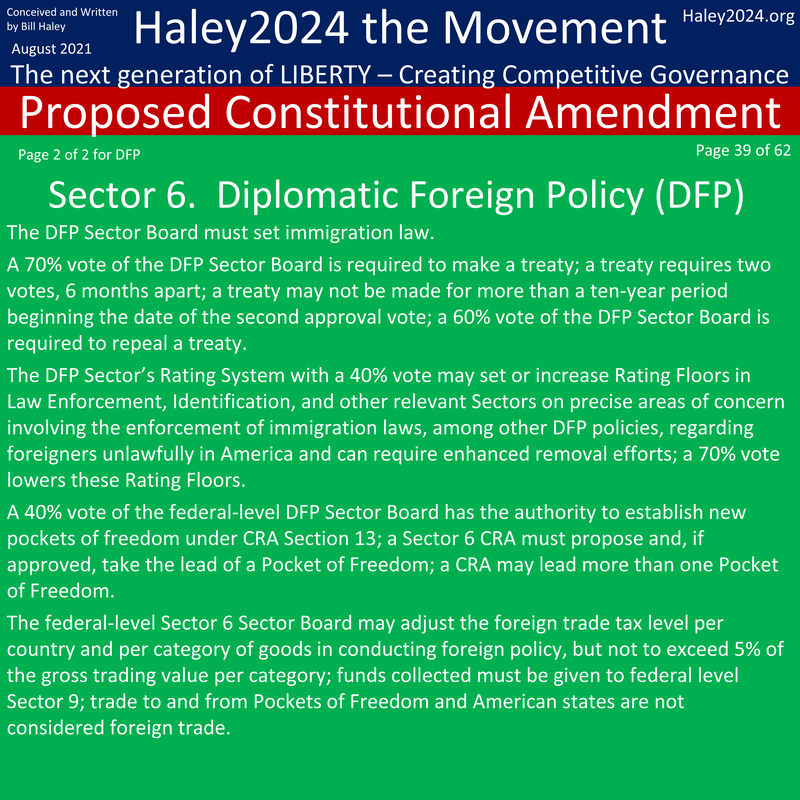
•A 70% supermajority vote of the DFP representatives is required to sign a Treaty with other nations. •The DFP must protect their authorization with a Diplomatic Accountability for War Panel that declares an end to the authorization and monitors if the CIC stays within the authorization. |
|
|
•A 40% DFP vote repeals or curtails any authorization of military force or other actions outside American borders.
•A 40% DFP Rating System vote is required to raise the Rating Floor on issues that infringe citizen ownership rights relating to the citizen-ownership-model of government. This mainly refers to illegal immigration. •DFP Rating Floors could cross over to the Law Enforcement Sector, forcing the police to cooperate with immigration officers. Pockets of Freedom would play a role in this issue. |
|
|