COMPETITIVE GOVERNANCE

  • HOME
    • FaceBook Versions
  • REFORMS
    • Constitution Creating all Reforms >
      • Constitution Videos page 1 >
        • Constitution Videos page 2
      • Constitution Images
    • Competitive Regulatory Agencies >
      • Videos: Competitive Governance >
        • Videos on competitive governance page 2
      • CRA Structure >
        • 70% Democracy FaceBook
        • Blog Statism Organizations
        • CRA: The Need for a New System
        • From Government to Societal Oversight Facebook
      • The 30 Sectors >
        • Separate Government Authority into 30 Sectors FaceBook
        • The Food Sector
        • The Manufacturing Sector
        • The Human Resources and Sales Sector
        • The Identity Sector: Personal and Business
        • The Environmental Sector >
          • Blog on EPA
        • The Work Safety and Disability Sector
        • The Media and Communications Sector
        • The Land and Water Sector
      • CRA Bullet Points
      • Blog on Competitive Regulatory Agencies
      • CRA Organization: Exclusive Control
      • Competitive Governance FaceBook
      • Media for CRAs
      • Competitive Representative Agencies FaceBook
    • The Rating System >
      • Videos the Rating System >
        • Videos: The Rating System per Sector
      • Rating Structure
      • Competitive Rating System Facebook
      • Blog on Ratings
    • Welfare to Charity >
      • The Charity System
      • The Charity Structure
      • The Charty Sector
      • Blog on Welfare to Charity
      • Videos on Welfare to Charity >
        • Videos on Charity page 2
        • Videos on Charities page 3
      • The Charitable Distribution Association - CDA Sector
      • The Charity Assessor Organization - AO Sector
      • The Family Law Sector >
        • Competitive Family Law Facebook
      • The Religious Sector
      • Media for Charity
      • End Welfare: Transition to Competitive Charity Facebook
    • Education >
      • Competitive School Boards FaceBook
      • Videos on education page 1 >
        • Videos on Education page 2
      • Education Structure
      • Colleges
      • Blog on Education
      • The Public School System Is Unconstitutional
      • Education articles and Videos
  • REFORMS2
    • Structure of the Foreign Policy and Private Military >
      • Competitive Military Facebook
      • Blog on Military
      • The Diplomatic Foreign Policy - DFP Sector
      • The Commander in Chief - CIC Sector
      • The Military Corporations Sector
      • The Military Capabilities System MCS Sector
      • The Military Authorization Agency - MAA Sector
    • Foreign Policy: Pockets of Freedom >
      • Pockets of Freedom Facebook
      • Blog on Pockets of Freedom
      • Videos POCKETS OF FREEDOMS
    • Social Security and Medicare >
      • Competitive Social Security Facebook
      • Blog on Social Security
      • The Insurance Sector
    • Roads / Transportation >
      • Competitive Roads FaceBook
      • Blog on Roads
      • Media on Road
    • Monetary Policy >
      • Videos Competitive Currency >
        • videos on Monetary policy page 2
      • Blog on Monetary Policy
      • Financial Sectors 18 and 19
      • Monetary Policy Structure
      • Competitive Currencies Facebook
      • Monetary Policy Media
    • Health Care >
      • Blog on Health Care
      • Competitive HealthCare Systems FaceBook
      • Heath Care Media
    • Violent Crime Mitigation System >
      • The Violent Crime (VC) Sector
      • Police >
        • Police Structure
        • Competitive Police Facebook
      • Law Enforcement Authorization (LEA)
      • The Judicial Authorities Sector
      • Prison and Corrections >
        • Competitive Prisons Facebook
  • Reforms3
    • Blog on issues of the day
    • Blog on Social Issues
    • RANDOM >
      • QIP's
    • Statism organizations
    • Haleynomics >
      • Laffer Curve
      • Haleynomics Videos >
        • HALEYNOMICS VIDEOS PAGE 2
      • Blog on Haleynomics
      • Educational Media and Books
    • Haley2024 taxes
    • Taxes
    • Debt
    • Corporate Proxy Groups
    • A Citizens Responsibility
    • Fighting Federal Control: 12 Proposed US Constitutional Amendments >
      • Fighting Federal Control Images and videos
      • Governor's Repeal
      • The Supreme Court
      • A New Court System
      • Changing the Head of the Inspectors General
  • VIDEOS/BLOGS
    • List of All Video Pages
    • BLOGS >
      • Haley2024 the movement Articles page 1
      • Haley2024 the movement Articles page 2
      • Haley2024 the Movement Articles page 3
    • Videos, improving the current system
    • Blog Images and Links
    • Blog on Haley2024 the Movement
    • Videos Haley2024 the Movement >
      • Videos Haley2024 the Movement Page 2
  • DONATE/ABOUT
    • Donate >
      • Volunteer!
    • About Bill
    • MY STUDY
    • Social Media

Corporate Tax Cuts

2/8/2018

 
Picture
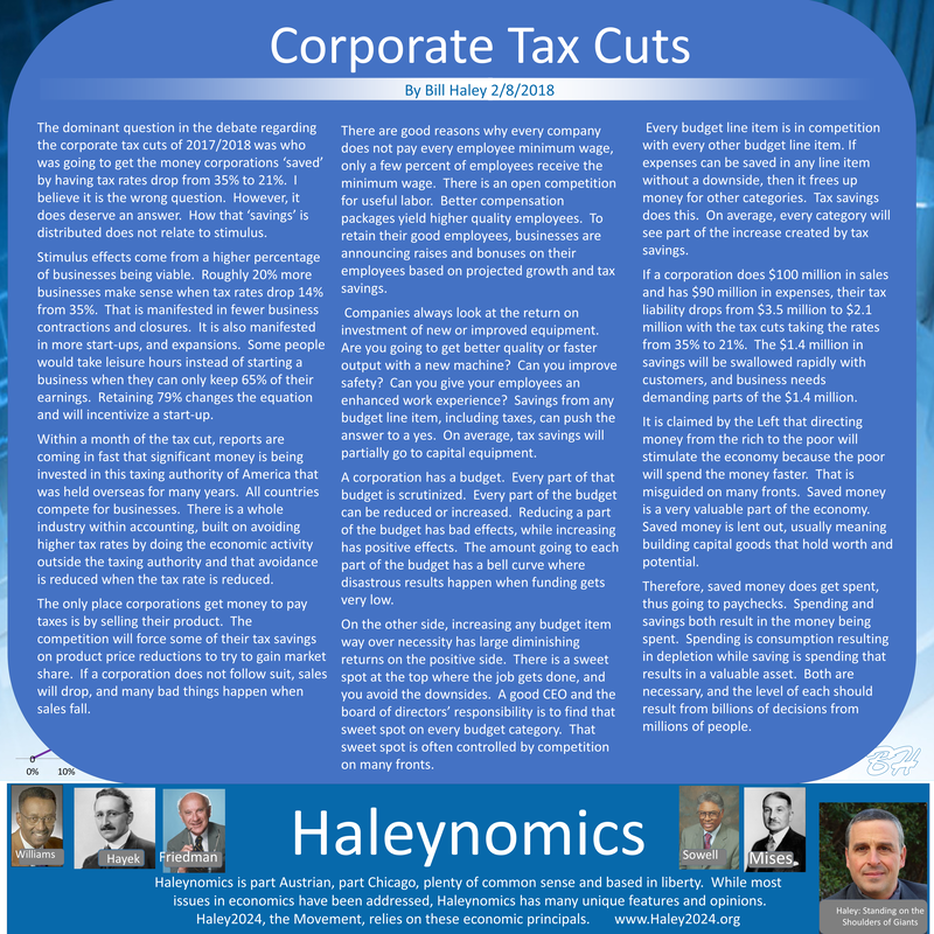
The dominant question in the debate regarding the corporate tax cuts of 2017/2018 was who was going to get the money corporations ‘saved’ by having tax rates drop from 35% to 21%.  I believe it is the wrong question.  However, it does deserve an answer.  How that ‘savings’ is distributed does not relate to stimulus.
​
Picture
Picture
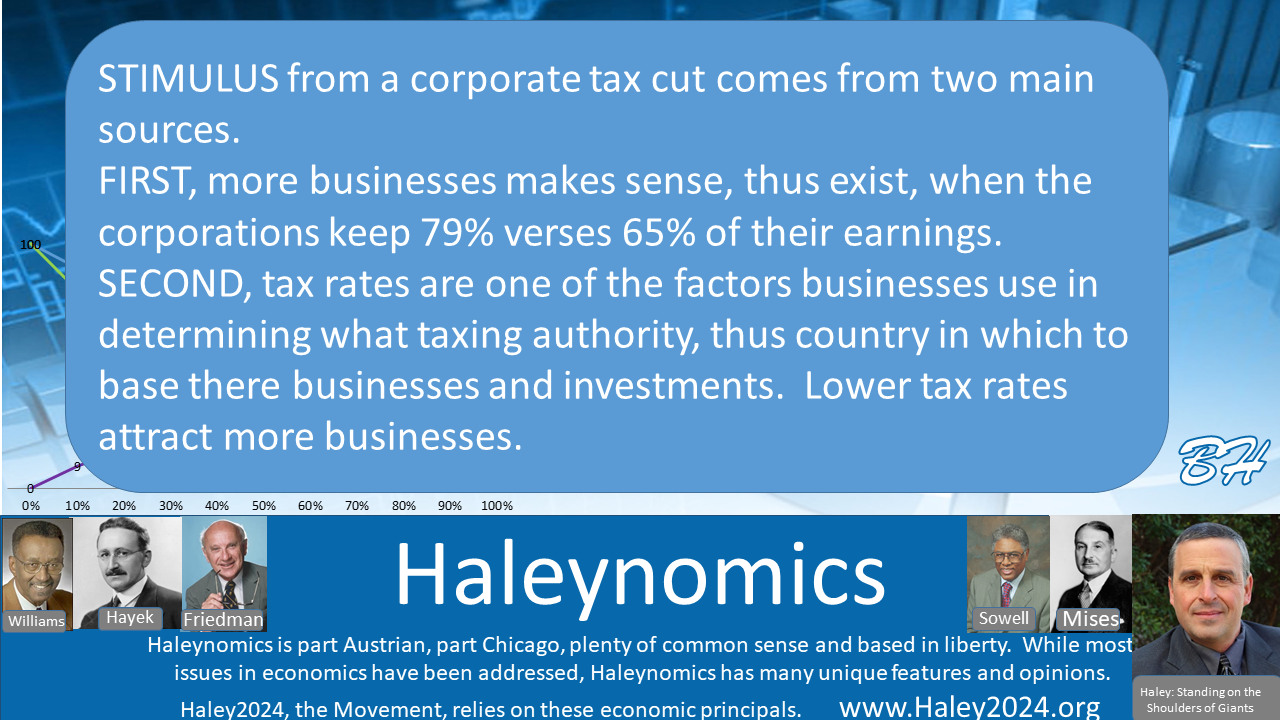
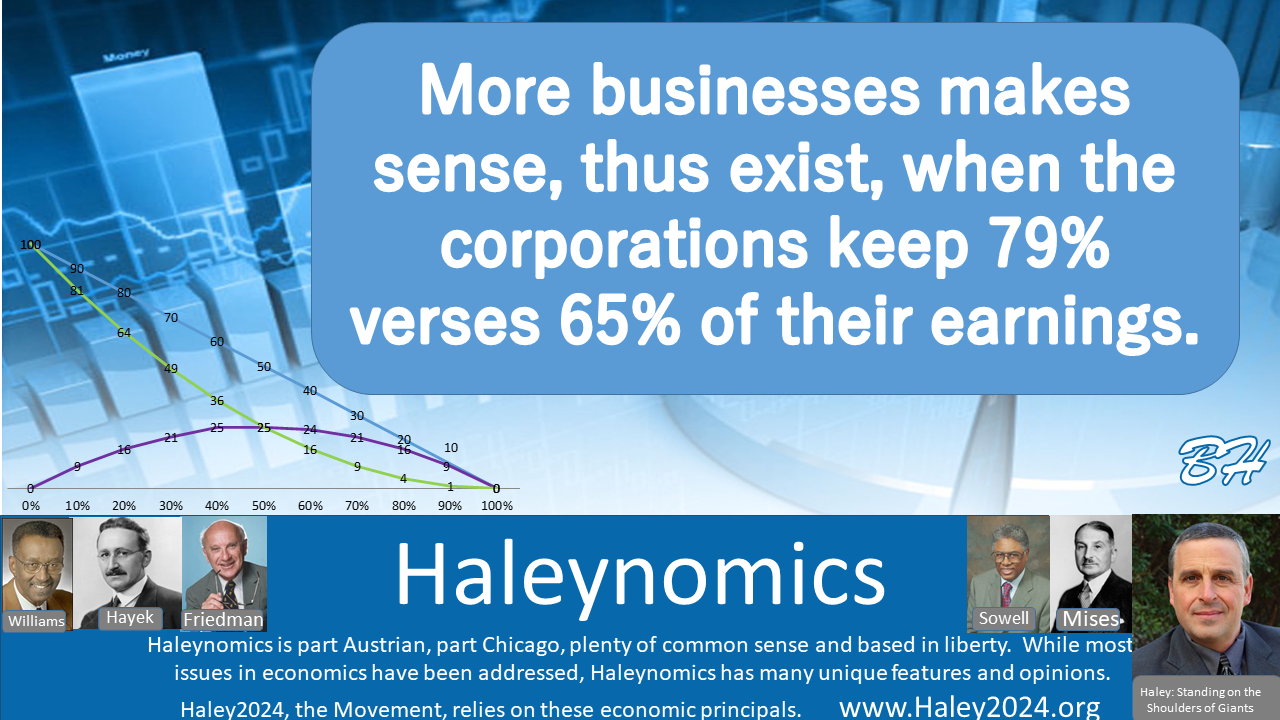
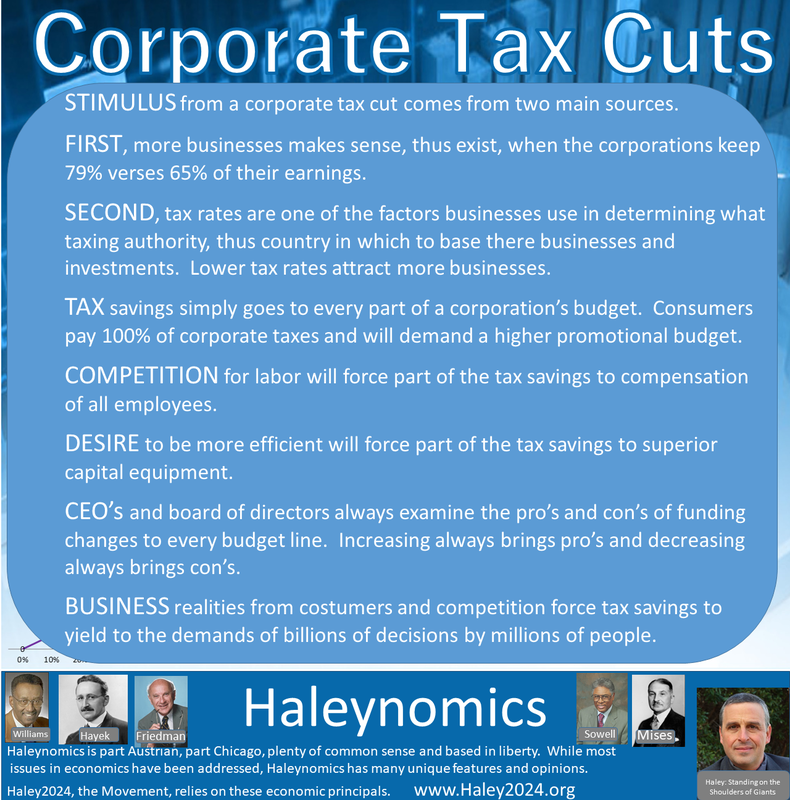
Stimulus effects come from a higher percentage of businesses being viable.  Roughly 20% more businesses make sense when tax rates drop 14% from 35%.  That is manifested in fewer business contractions and closures.  It is also manifested in more start-ups, and expansions.  Some people would take leisure hours instead of starting a business when they can only keep 65% of their earnings.  Retaining 79% changes the equation and will incentivize a start-up. 
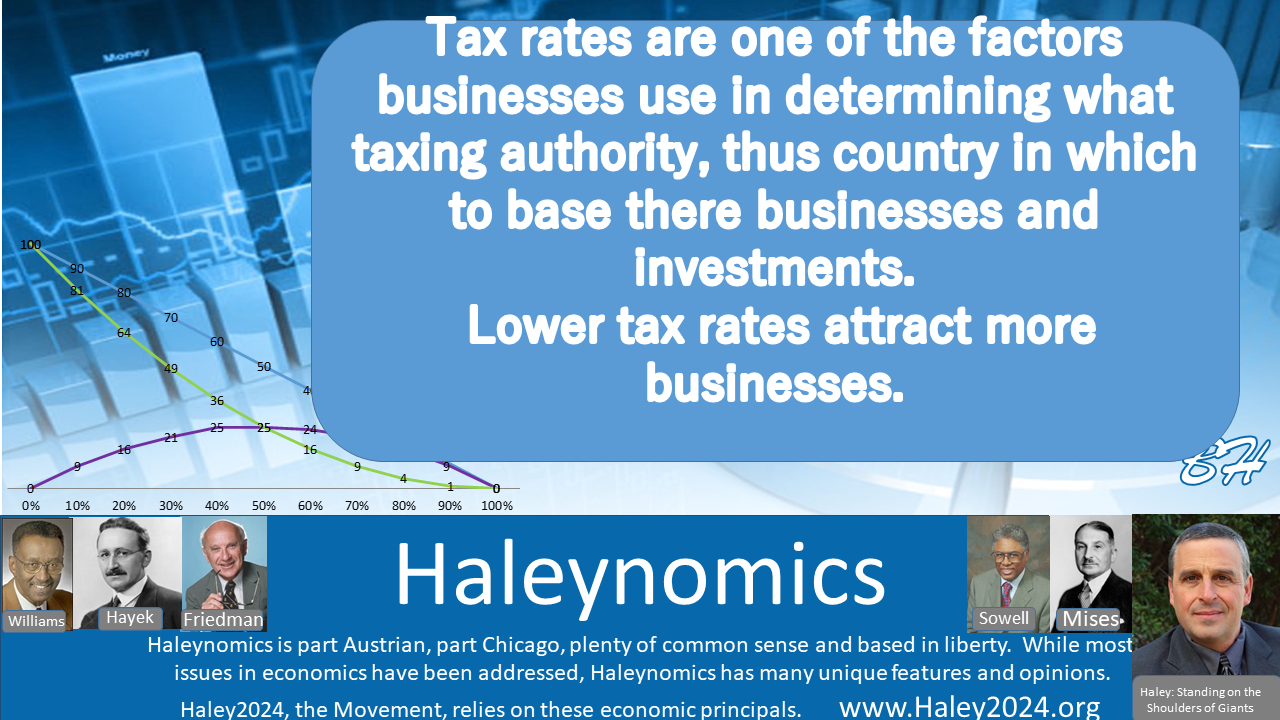
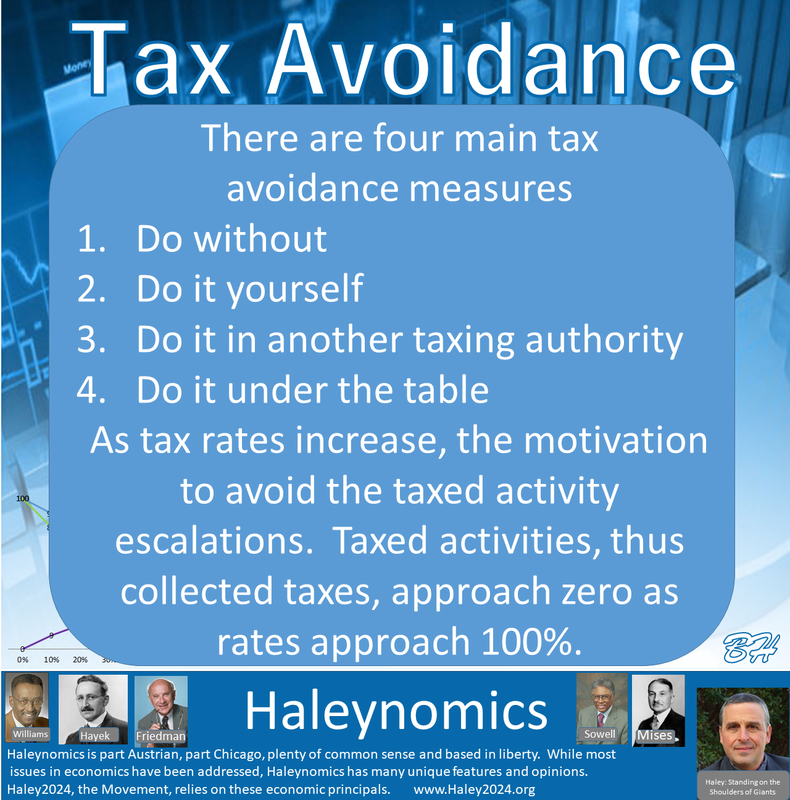
Within a month of the tax cut, reports are coming in fast that significant money is being invested in this taxing authority of America that was held overseas for many years.  All countries compete for businesses.  There is a whole industry within accounting, built on avoiding higher tax rates by doing the economic activity outside the taxing authority and that avoidance is reduced when the tax rate is reduced. 
Picture
Picture
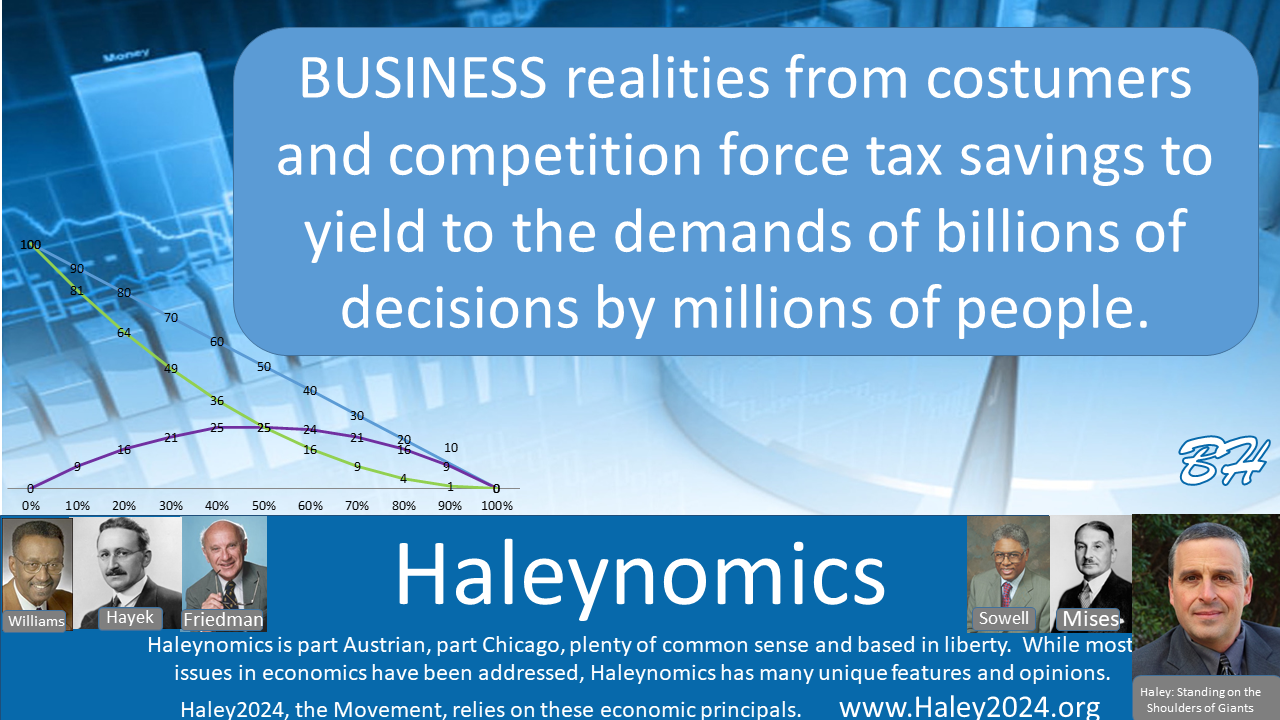
​The only place corporations get money to pay taxes is by selling their product.  The competition will force some of their tax savings on product price reductions to try to gain market share.  If a corporation does not follow suit, sales will drop, and many bad things happen when sales fall. 
​
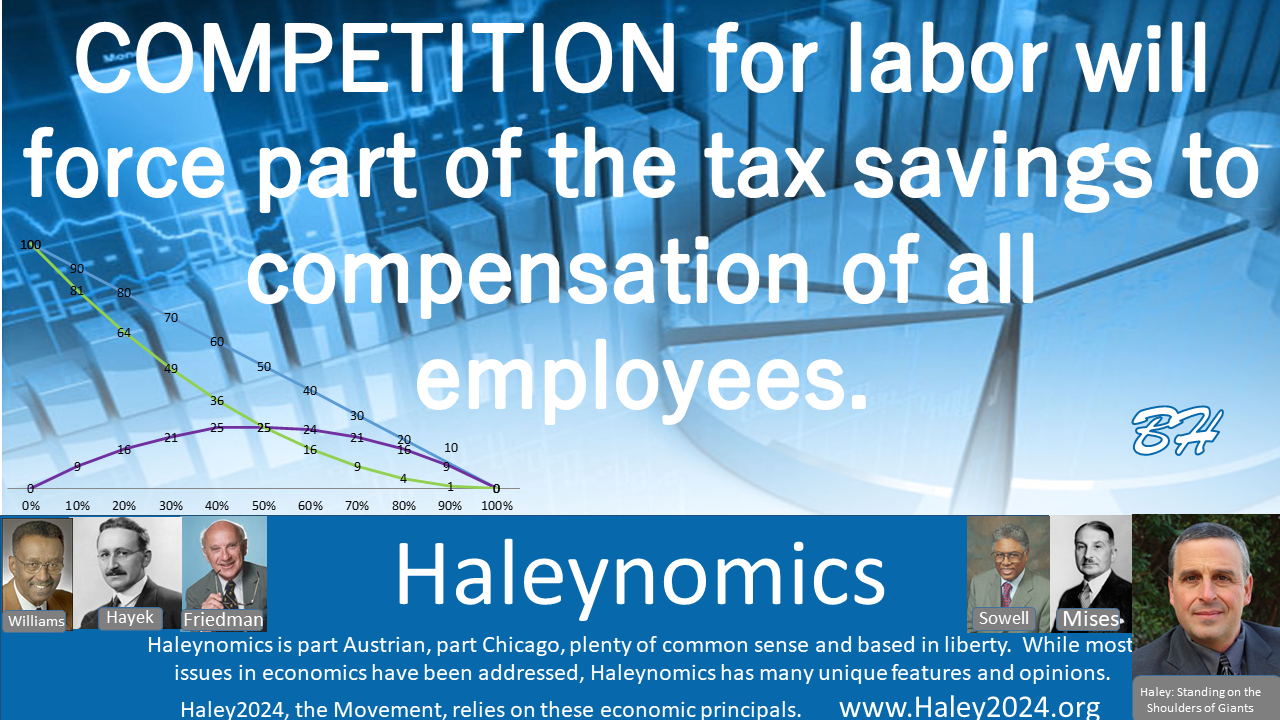
There are good reasons why every company does not pay every employee minimum wage, only a few percent of employees receive the minimum wage.  There is an open competition for useful labor.  Better compensation packages yield higher quality employees.  To retain their good employees, businesses are announcing raises and bonuses on their employees based on projected growth and tax savings.
Picture
Picture
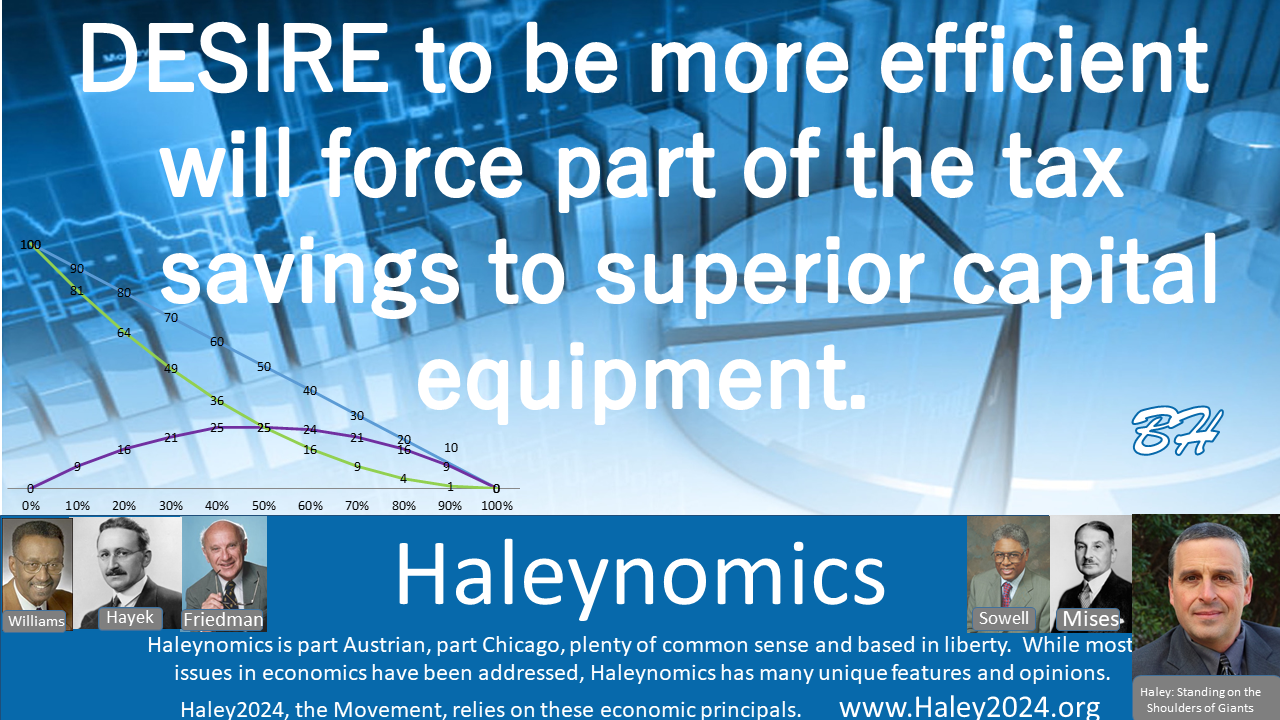
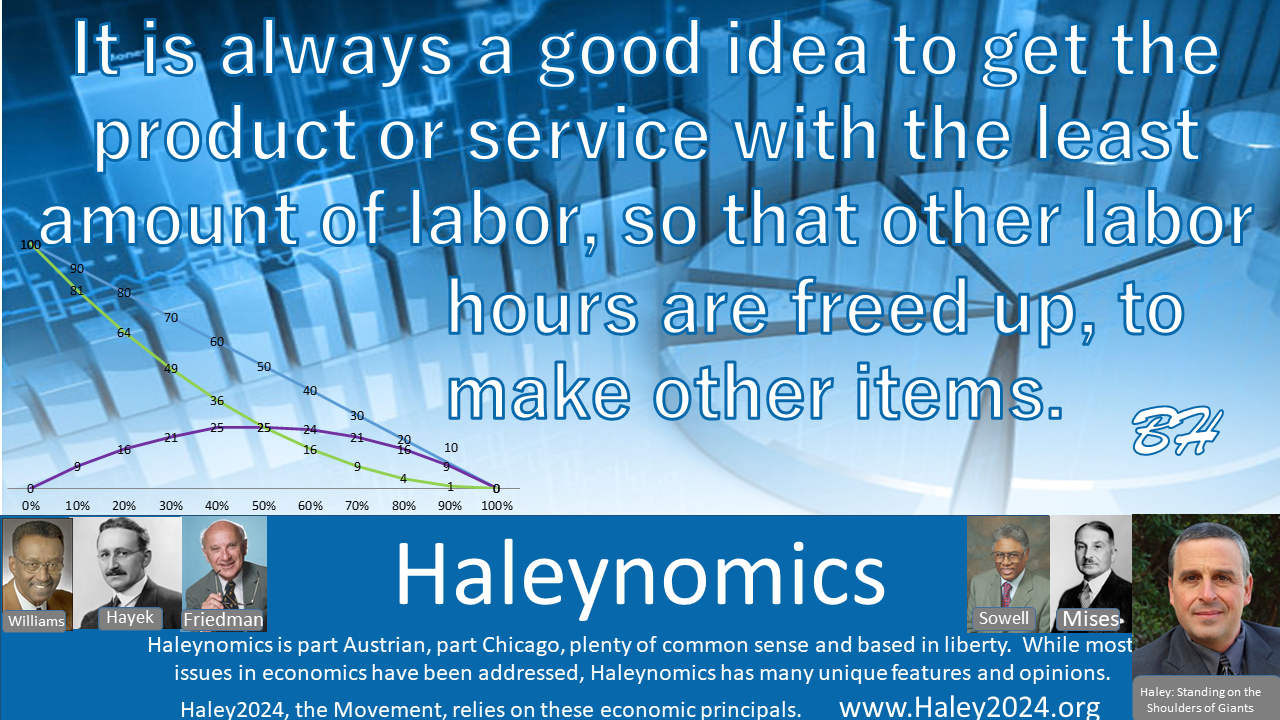
 Companies always look at the return on investment of new or improved equipment.  Are you going to get better quality or faster output with a new machine?  Can you improve safety?  Can you give your employees an enhanced work experience?  Savings from any budget line item, including taxes, can push the answer to a yes.  On average, tax savings will partially go to capital equipment.
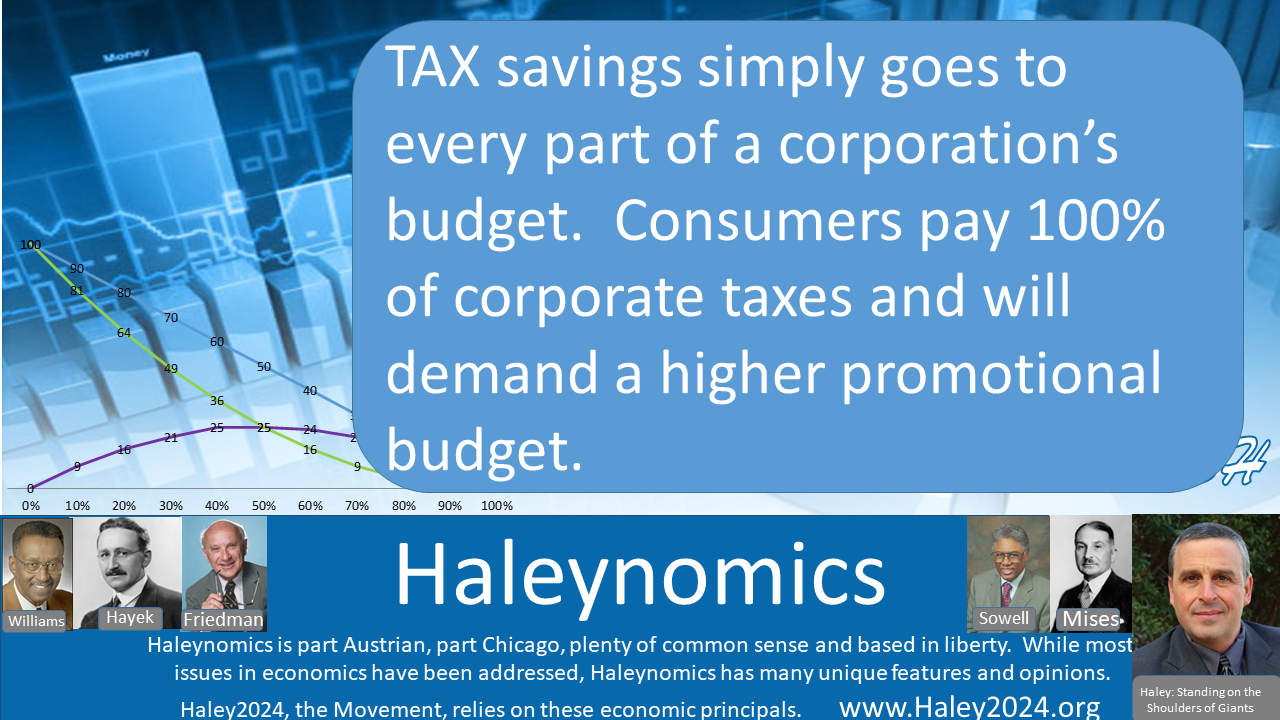
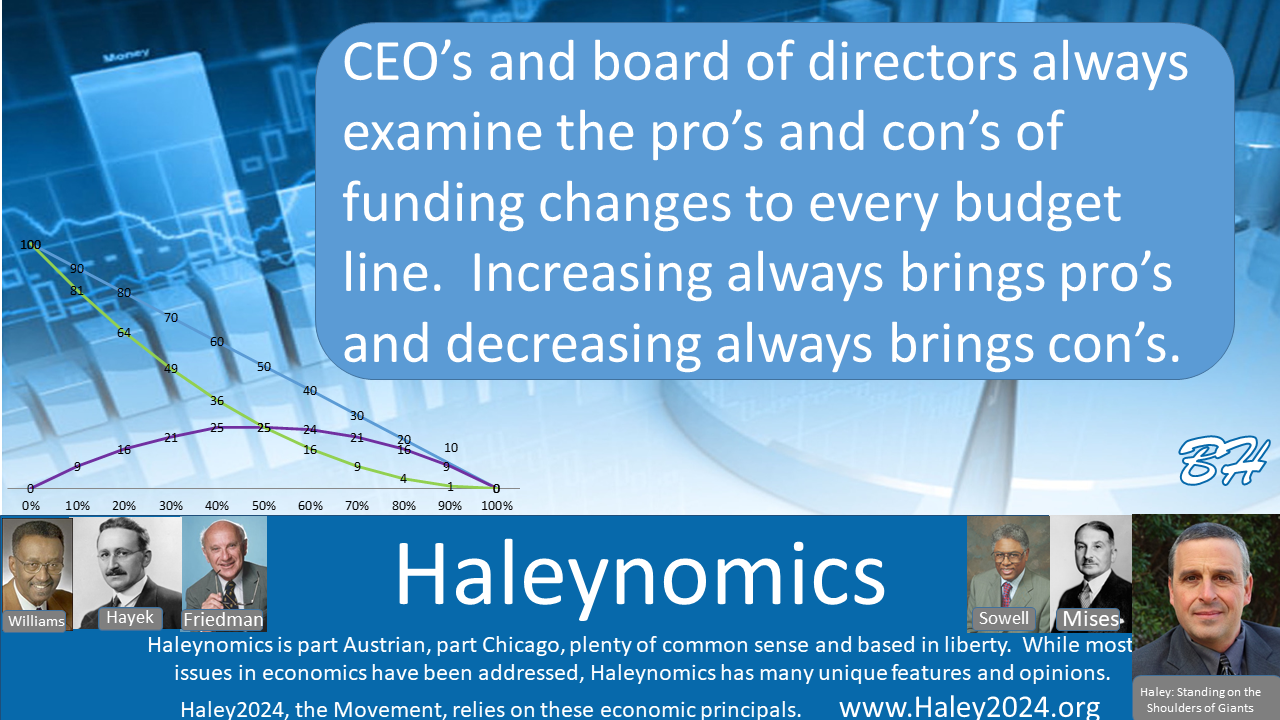
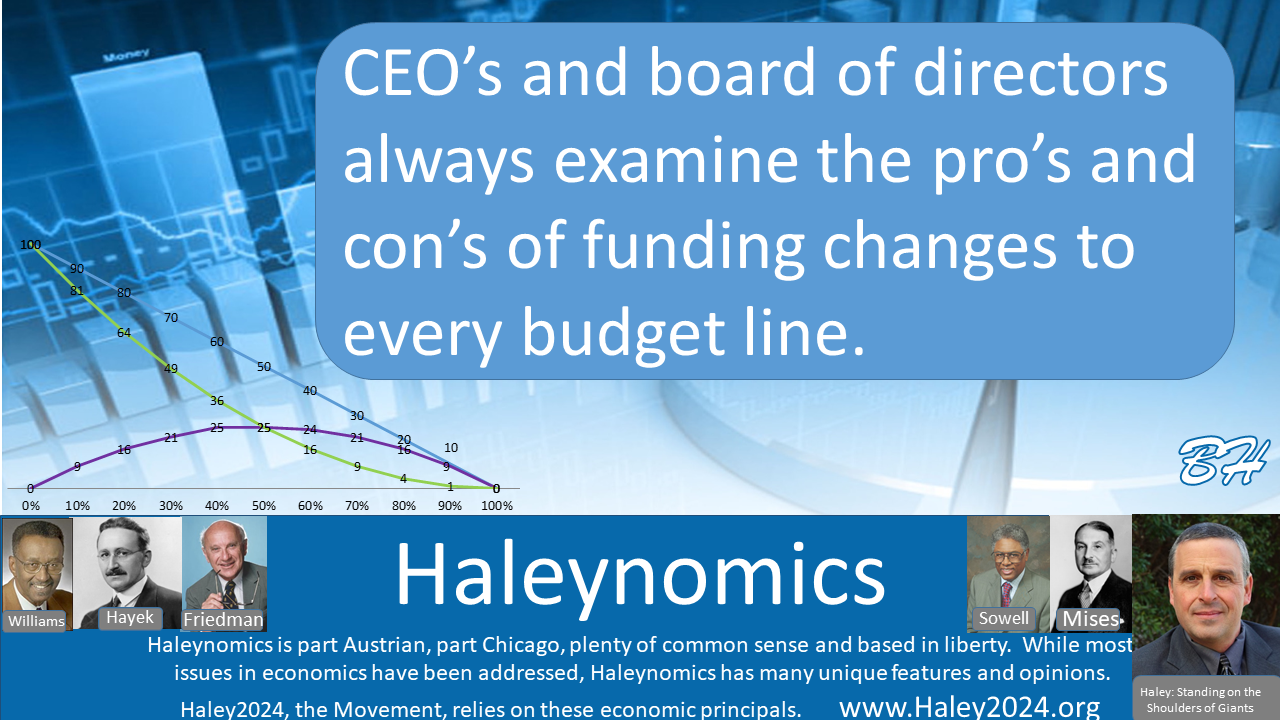
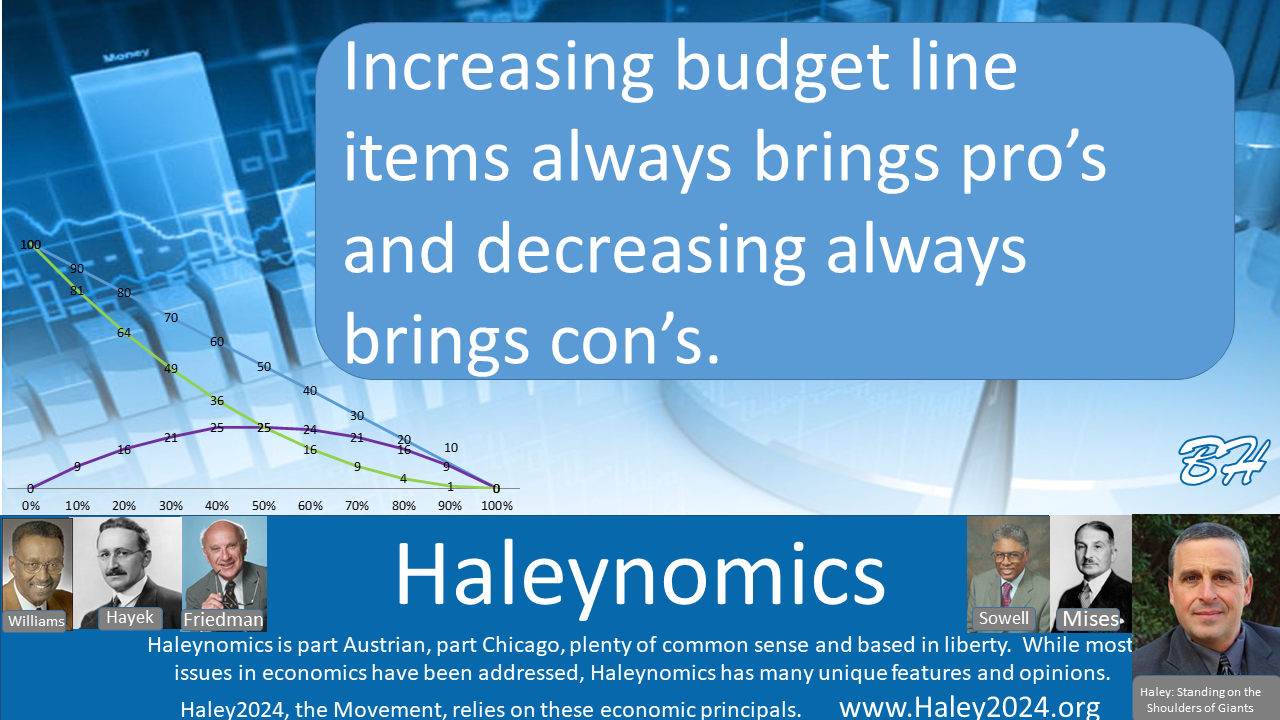
​A corporation has a budget.  Every part of that budget is scrutinized.  Every part of the budget can be reduced or increased.  Reducing a part of the budget has bad effects, while increasing has positive effects.  The amount going to each part of the budget has a bell curve where disastrous results happen when funding gets very low.
Picture
Picture
​On the other side, increasing any budget item way over necessity has large diminishing returns on the positive side.  There is a sweet spot at the top where the job gets done, and you avoid the downsides.  A good CEO and the board of directors’ responsibility is to find that sweet spot on every budget category.  That sweet spot is often controlled by competition on many fronts.
​ Every budget line item is in competition with every other budget line item. If expenses can be saved in any line item without a downside, then it frees up money for other categories.  Tax savings does this.  On average, every category will see part of the increase created by tax savings.
Picture
Picture
If a corporation does $100 million in sales and has $90 million in expenses, their tax liability drops from $3.5 million to $2.1 million with the tax cuts taking the rates from 35% to 21%.  The $1.4 million in savings will be swallowed rapidly with customers, and business needs demanding parts of the $1.4 million.
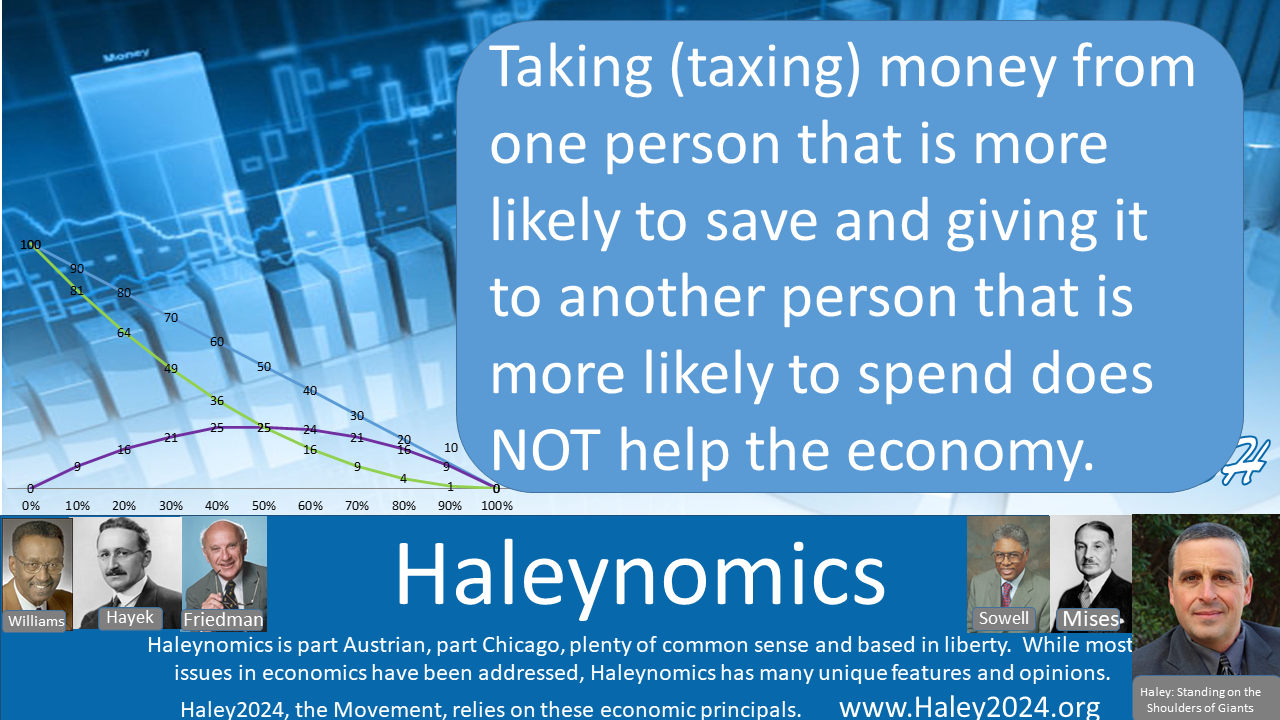
​It is claimed by the Left that directing money from the rich to the poor will stimulate the economy because the poor will spend the money faster.  That is misguided on many fronts.  Saved money is a very valuable part of the economy.  Saved money is lent out, usually meaning building capital goods that hold worth and potential. 
Picture
Picture
​Therefore, saved money does get spent, thus going to paychecks.  Spending and savings both result in the money being spent.  Spending is consumption resulting in depletion while saving is spending that results in a valuable asset.  Both are necessary, and the level of each should result from billions of decisions from millions of people. 
Picture
Picture

Comments are closed.
Please spread the word of these new government reforms.  Share this website with friends in emails and please link or share on social media. ​ Haley2024 the Movement

Contact

All Social Media Sites
This Haley2024 website is strictly non-profit: Educational on public policy. 
Contact: [email protected]
​Text 757-408-8255
This searches only www.Haley2024.org
Picture